
City Council Ends Public Comment Restrictions, Passes Transparency Ordinance, and Tables Drone Base Proposal
3.3.2026 / News / Daisy Dale
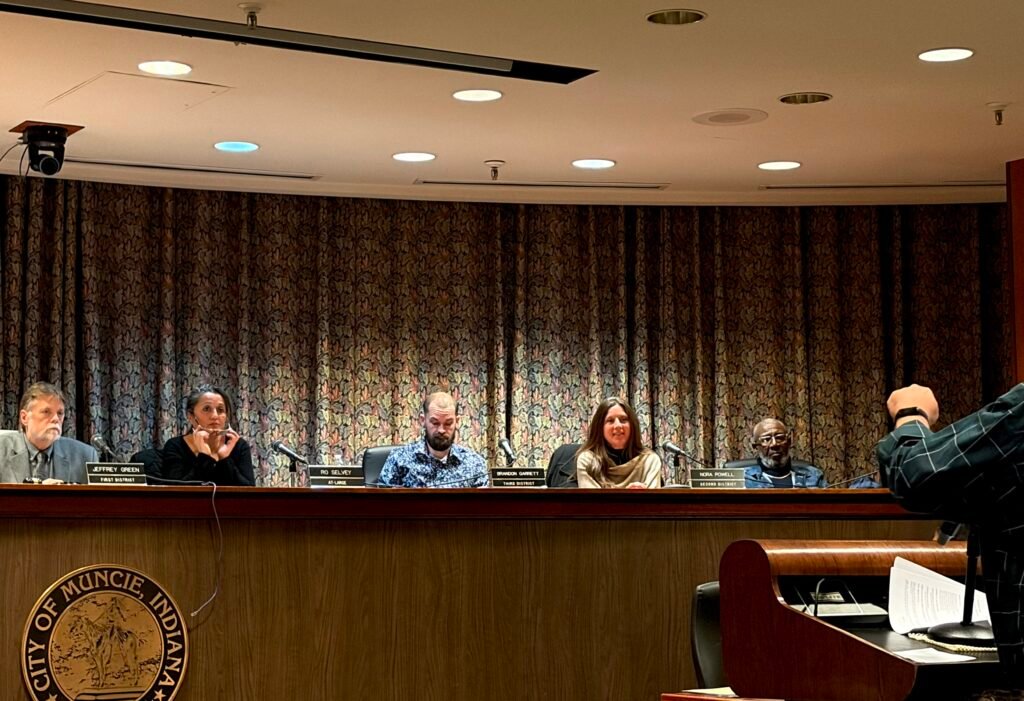
MUNCIE, Ind. — In an astonishing Muncie City Council meeting held last night, the Republican majority council took a turn of direction on three major issues. After recent uproar over public comment restrictions made by newly-appointed Council President Jeff Green, and an ordinance filed for a third time seeking to prevent council signatures from being forged on action items, both issues came to an end. Additionally, a resolution putting Muncie into an interlocal agreement for a municipal drone base was tabled by a 6-3 vote.
At the January meeting, just after Jeff Green was appointed as council’s new president, he announced six new changes for public comment including limits to how long members of the public can speak for, restricting the public from speaking when ordinances are up for introduction, and not allowing members of the public to sign up to speak after the meeting starts. The list also included a requirement for speakers to state their home address, which was reversed by Green at the February meeting.
Close to 20 people at the February meeting spoke against the rule changes, and at the beginning of the March meeting Green said the following: “[I] would like to make a comment concerning the structure of the council meetings. The way that we had been doing things we’re gonna change it again tonight, going back to the old former format. Public comment will be at the end of the meeting, three minutes will be given to each person. Do want you to know that Belinda [Munson] has asked that the list that Ro [Selvey] has for those who will be speaking, your name will be included into the minutes of the meeting. So I want you to know that.”
Following his decision was Ordinance 6-26, an agenda item with a history going back several months. The ordinance originated from a forged signature made by Muncie Mayor Dan Ridenour’s executive assistant, Shareen Wagley, and revises city code to ensure future agenda items are filed by members of council. It was first introduced as Ord. 10-25 in November and voted down at the same meeting, however was refiled in January. While introduced unanimously at the January meeting, Councilor Ro Selvey asked at the February meeting to amend the ordinance to additionally require the city controller give a signature to all future ordinances and resolutions alongside a council sponsor and council attorney.
At that meeting a near hour-and-a-half discussion included four different amendments, various debate on the ambiguous language of “and” or “or” being used, questions over council’s ability to act autonomously with the added change, and a recess called by Green. After Ro Selvey’s first amendment to the ordinance passed, council voted down the amended ordinance 7-2. Shortly after that meeting the ordinance was refiled by Councilor Nora Powell as Ord. 6-26.
During last night’s discussion multiple members of the audience insisted that the rules be suspended to allow the refiled ordinance to not only be introduced but adopted. Ellen Whitehead, a Muncie Resists member and advocate of the ordinance since its inception, called a vote against it a “vote against transparency and against the clear public position on this topic.”
The vote for introduction, as well as the suspension of rules and adoption, was all unanimous.
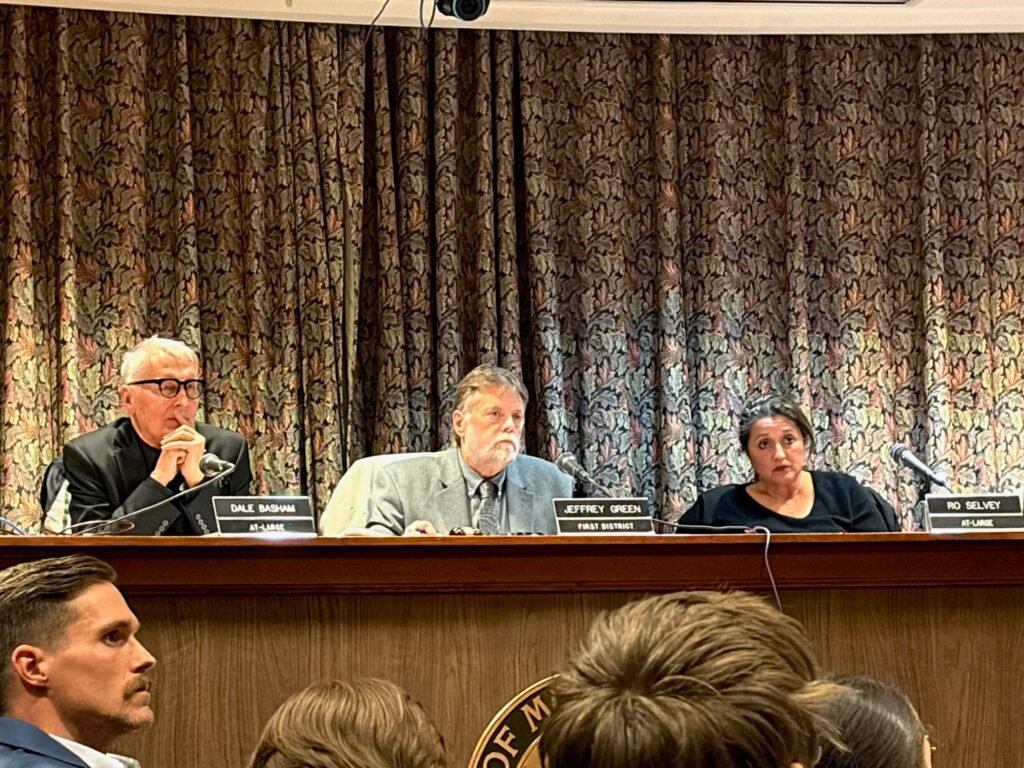
Following the end to the several months long debacle, a resolution putting Muncie into an interlocal agreement for a municipal drone base was tabled. If passed, Resolution 4-26 would have put Muncie into a five-year agreement with Delaware County, which would would have “no financial obligation” for the county while Muncie would be responsible for all costs as well as future legal liabilities. Delaware County according to the proposed agreement “shall retain the right to review and approve all proposed mounting designs.”
According to Police Chief Nathan Sloan, drones have already been used by the police department for the past 8 to 10 years. Sloan was pressed by council and the public about potential costs for the project, due to the agreement not having a cost provided, before he gave an estimate of under $5,000. Cooper Archer, referring to the finances of the project as well as an earlier resolution proposed by Muncie Central High School students, told council “what type of world is it where the students come here with more statistics, information on the costs from two different sources, [while] the fucking police have no clue what’s going on.” Archer is a recent plaintiff in one of two ACLU lawsuits against Ball State University over free speech discipline and a ban on campus protests held within 50-feet of campus buildings.
The resolution was tabled by a 6-3 vote. Council-members Dale Basham, Jerry Dishman, and Jeff Green voted against the decision.
Other events at the meeting: Ord. 7-26, an ordinance reducing the number of Beech Grove Cemetery board members from 7 to 2 passed unanimously. Res. 3-26, a Muncie Central High School project recommending a pedestrian scramble light at the intersection of Myrtle Avenue and Walnut Street, also passed unanimously. Linda Daniel, Program Director at IU Health Ball Addiction Treatment and Recover Center, gave a committee report on the Opioid Fund Advisory Committee. The committee has met three times since all appointments were fulfilled in late October, and is making an effort to support local agencies dealing with addiction and recovery.