
Muncie’s Hidden Ledger: Tillotson Fire Station #5
7.6.2026 / News / Todd Smekens
This story was originally published by Todd Smekens for Muncie Voice. Republished with permission.
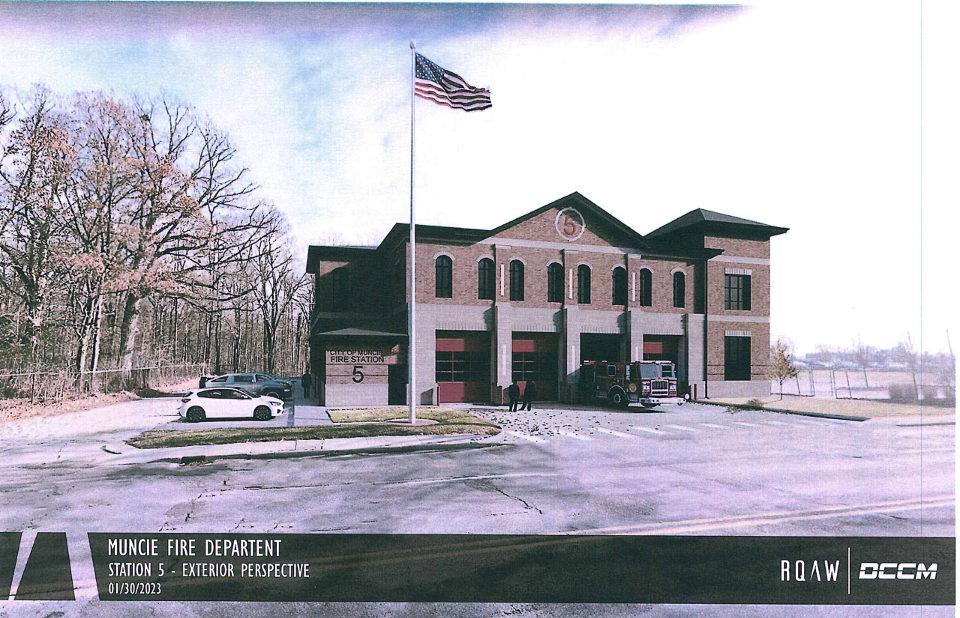
A recent chaotic Public Services Committee meeting on the proposed $11.5 million replacement of the Tillotson Fire Station #5 was less a presentation and more a retreat. When critical questions arose about bond structures, lease terms, and long-term interest costs, the Ridenour administration’s complete absence transformed the proceeding into a taxpayer “goose egg.”
While the administration may wish to avoid public oversight, Muncie Voice will not be absent. By analyzing public data from the Indiana Gateway municipal finance portal, we have synthesized the precise ledger that Mayor Ridenour’s team is actively hiding. The data does not show a prudent financial strategy; it shows an administration backed into a severe financial corner, leveraging every legal loophole available to bypass strict state-mandated borrowing limits while sticking Muncie taxpayers with a massive, hidden bill.
The Elephant in the Room: Muncie's Total Debt of $70 Million
The immediate narrative after the committee’s collapse was a rumor that Muncie had “maxed out” its borrowing capacity. Hard data confirms this is essentially correct. To understand why Ordinance 9-26 is structured as a lease-purchase agreement through a private developer, one must first look at the massive amount of debt the city currently carries on its books.
According to Muncie’s self-reported “Total Debt by Unit Report” on Gateway, the civil city currently has $70,628,695 in total outstanding debt obligations, structured across direct bonds, traditional loans, and — most importantly– long term lease payments.
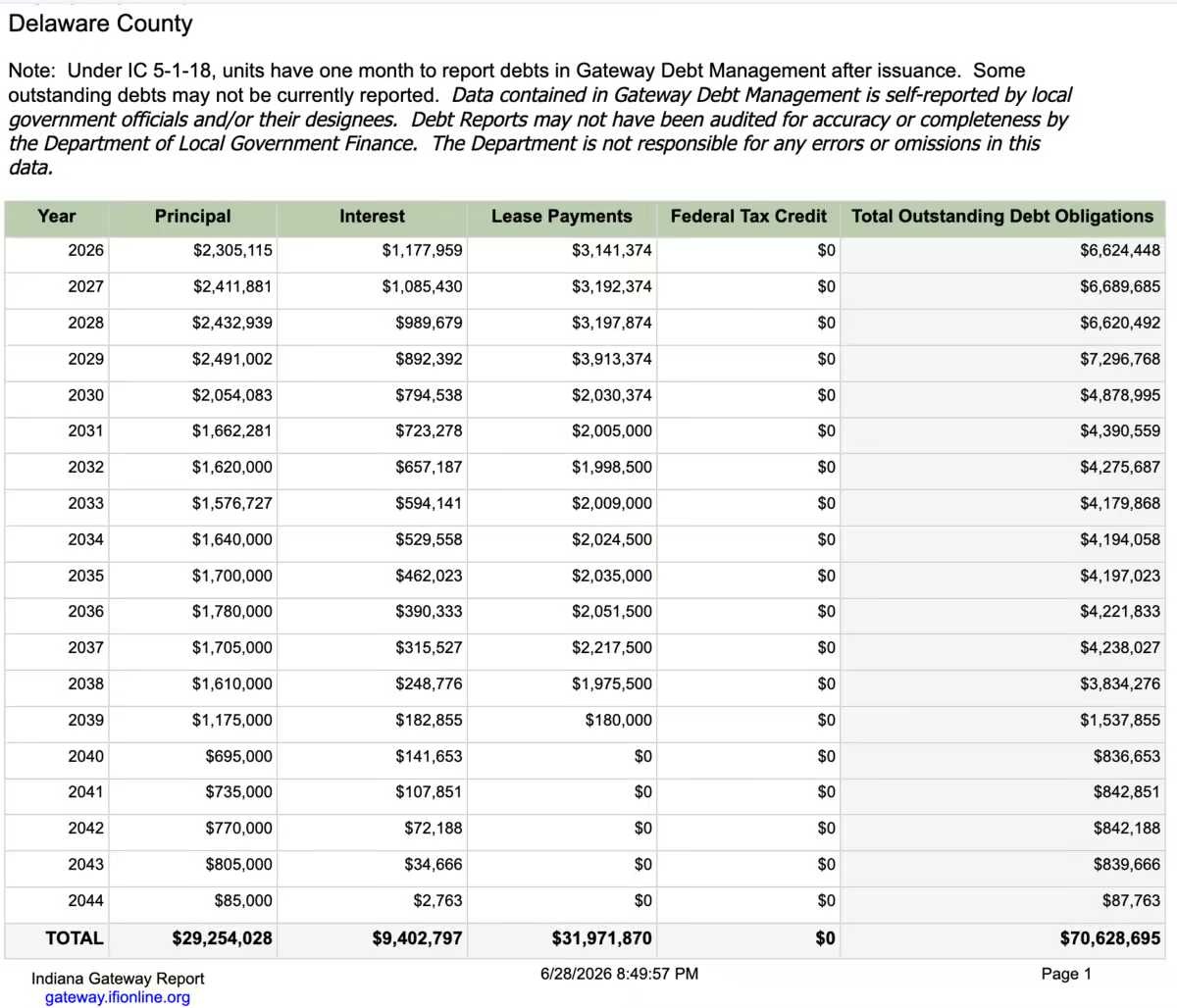
This $70.6 million figure is staggering for a city of Muncie’s size, representing a combined liability that directly impacts every resident’s property tax bill. If the standard 2% constitutional borrowing margin were a hard ceiling on all municipal spending, the city would be paralyzed.
Understanding the 2% Spending Trap
Indiana’s Constitution applies a very strict “2% spending cap.” This provision prevents civil cities from issuing standard, general obligation (G.O.) bonds that exceed 2% of their Total Adjusted Net Assessed Value.
Using state data on Muncie’s total assessed property value—$2,133,010,000—we can calculate the city’s legal G.O. borrowing limit:
$2,133,010,000 times 0.02 = $42,660,200.
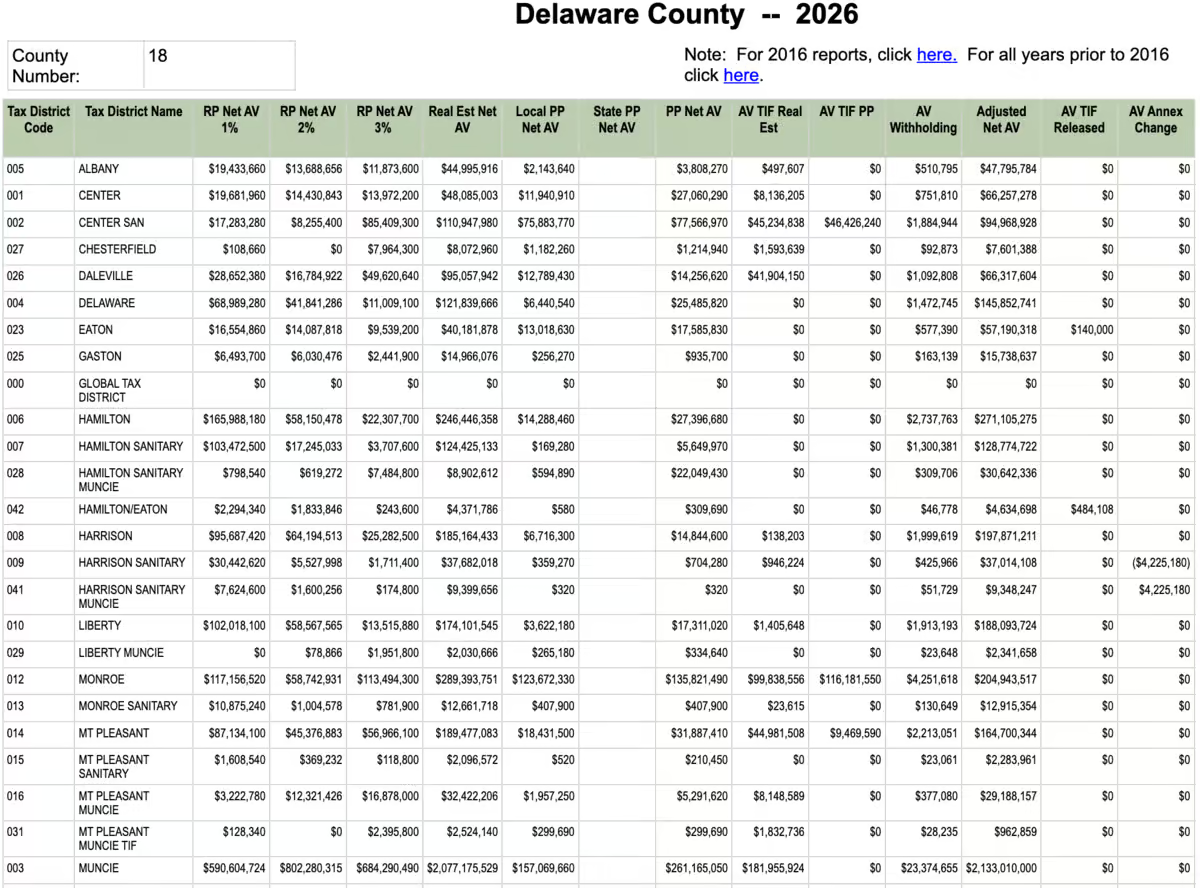
Muncie is the last item.
Muncie’s hard cap on direct bonds—debt paid back from general taxes—is precisely $42.6 million.
When you peel back the $70.6 million overall debt figure and look strictly at the traditional bonds ($38,656,825), it becomes clear that the administration is operating right on the legal precipice. By sitting at nearly $39 million in standard direct debt, they have only a paper-thin margin of roughly $4 million remaining before they are constitutionally barred from borrowing another dollar.
Fire Station Solution: Funding an $11.5 Million Deal on a $4 Million Budget
This brings us back to the Ridenour administration’s push for the $11.5 million Tillotson Fire Station. The basic arithmetic proves that a traditional bond issue to fund this project is legally impossible. With only $4 million in G.O. borrowing room remaining, they cannot finance an $11.5 million replacement station.
This is why they hid the financials from the committee: they prove their dependence on the lease-purchase loophole. To bypass the 2% spending wall, the administration must use a private developer, such as GM Development, to issue the debt and construct the facility. The city then enters into a long-term “lease.” Under an antiquated Hoosier loophole, these annual lease payments—which are set at over $31.9 million in Gateway’s current reports—are legally classified as operating obligations rather than direct debt.
The constitution treats lease-purchase payments like an annual phone bill rather than a mortgage. It bypasses the $42 million constitutional ceiling, allows an over-leveraged administration to keep spending, and adds another massive, dedicated liability to the property tax base. If Ordinance 9-26 passes, the real total debt of Muncie, Indiana, will balloon past $82 million, and the “Muncie Oligarchy” will have used accounting acrobatics to bury the public’s right to override it.
The Phantom Partners: BSU and IU Health Duck the Bill
The Ridenour administration has repeatedly wrapped Ordinance 9-26 in the shiny packaging of a “public-private partnership,” strongly implying that Ball State University and IU Health Ball Memorial Hospital are central stakeholders in rebuilding a new Fire Station #5. Yet, when the curtain was pulled back at the Public Services Committee meeting, representatives from both multi-million-dollar institutions were completely missing from the table. Their absence leaves high-stakes questions unanswered: Is either institution putting up a single dollar of down payment capital, or will local property owners entirely subsidize the heavy infrastructure required to safeguard their expanding institutional footprints along the Tillotson Avenue corridor?
The silence is particularly deafening considering that a state-of-the-art facility housing a specialized ladder truck directly protects massive, tax-exempt institutional assets—including high-density student housing and expansive medical complexes. By keeping these negotiations behind closed doors, shepherded by municipal financial advisors like Baker Tilly, the details avoid statutory public scrutiny until a final contract is dropped on the council floor. If these wealthy, non-profit institutions are allowed to dodge a formal commitment to annual operating and maintenance expenses, Muncie taxpayers will be stuck holding an $11.5 million mortgage on a specialized hub that primarily serves entities that pay not a single dime in local property taxes.
Shifting the Private Risk Premium onto Public Backs
Beyond the raw construction costs, the physical proximity of a state-of-the-art emergency facility housing a specialized ladder truck yields massive, unpublicized corporate financial benefits for both Ball State University and IU Health. Commercial property insurance premiums for high-occupancy, high-hazard institutional complexes are heavily dictated by fire protection metrics, specifically the “distance-to-first-due” apparatus underwriting models. By placing this specialized tactical asset right on the Tillotson corridor, the city is effectively subsidizing the exact underwriting criteria these multi-million-dollar entities need to slash their private insurance overhead and avoid costly mandatory on-site private mitigation upgrades. Muncie taxpayers are being asked to take on an $11.5 million lease obligation to build a hub that protects tax-exempt assets, while the corporate beneficiaries pocket the direct financial kickback in insurance savings without contributing a single dime to the underlying debt.
Translating the Fine Print: The Triple-Threat Trap in Ordinance 9-26
When you strip away the dense legal jargon drafted by Indianapolis bond attorneys, the fine print of Ordinance 9-26 reveals three distinct mechanisms designed to shield private developers and institutional partners while exposing local neighborhoods to total financial risk:
The "Empty Pockets" Hand-Off (Section 2)
The ordinance begins with a formal admission that Muncie has zero cash on hand to fund this $11.5 million project. Instead of finding internal efficiencies, the council explicitly hands the keys over to outside financial architects—specifically, LWG CPAs & Advisors and Bose McKinney & Evans LLP—to construct a complex lease-purchase workaround that bypasses standard voter-approved debt limits.
The Diluted Revenue Line (Section 5)
The administration pledges Muncie’s Local Income Tax (LIT) revenues to cover the annual lease payment. However, the text reveals that this pot is already heavily diluted, placing this new firehouse debt “on a parity” (equal footing) with existing cash drains such as the Horizon Center, Madjax, and Canal District obligations. They are over-allocating the exact same pool of money.
The Automatic Property Tax Trigger (Section 5)
This is the ultimate safety net for the lenders. The ordinance mandates that if those crowded income tax revenues ever fall short, the city will automatically bypass the constitutional 2% direct debt cap and levy an ad valorem property tax hike on every home and business owner in Muncie.
This translation lays bare the exact mechanism of the top-down (oligarchic) arrangement. The outside firms ensure that the lenders face zero risk, the non-profit institutions (BMH & BSU) have their corridor protected for free, and local residents serve as the ultimate guarantors for everything, which is why Muncie’s debt load is nearly double the legal limit, if the lawyers weren’t using legal loopholes. Debt is debt.